


Microfiber and cotton towels can both be useful, but they are not interchangeable. Microfiber is usually the better choice when fast drying, compact storage, and low bulk matter. Cotton is usually the better choice when you want a natural fiber, a familiar plush feel, and an everyday bath towel that is comfortable against the skin.
Quick answer: choose microfiber for travel, gym bags, pool days, hair drying, and situations where a towel must dry fast between uses. Choose cotton for regular showers, hand towels, guests, and anyone who prefers a softer, more traditional towel feel. The right choice depends on the job, not on one material being universally better.
Microfiber vs. cotton towels at a glance
| Feature | Microfiber | Cotton |
|---|---|---|
| Drying speed | Usually very fast | Varies by weave and weight; generally slower when plush |
| Packability | Excellent | Bulkier, especially terry towels |
| Feel on skin | Smooth, but may feel grabby on very dry skin | Familiar, soft, and plush when well made |
| Best uses | Travel, gym, swimming, hair, sports, cleaning | Daily bath, hands, guests, kitchen, household use |
| Lint | Usually low lint | Can shed when new, depending on construction |
| Care concern | Avoid high heat and fabric softener buildup | Avoid excess detergent and routine fabric softener |
When microfiber towels make more sense
Microfiber is made from very fine synthetic fibers. Its main advantage is efficiency: it can absorb moisture quickly, dries fast after hanging, and takes up little space in a bag or closet. That makes it practical for travel, workouts, camping, pool days, and small bathrooms with limited airflow.
Microfiber is often best used by pressing or patting rather than rubbing. Some people notice that a microfiber towel catches slightly on rough hands or very dry skin. That is not necessarily a defect. It is part of how fine fibers grip moisture, but it can make the material less pleasant for someone who wants a fluffy post-shower towel.
Verified microfiber example
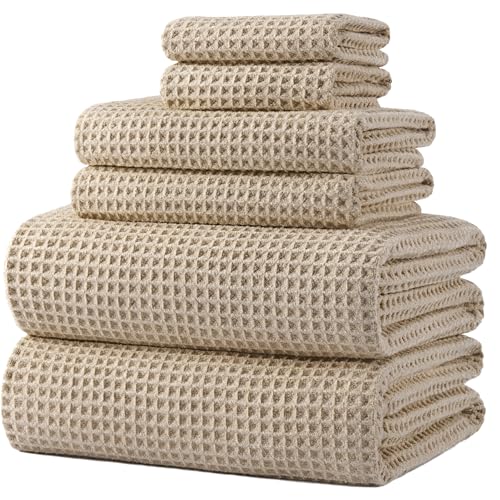
The POLYTE 430 GSM Microfiber Waffle Bath Towel Set on Amazon is listed as a six-piece quick-dry microfiber set with two body towels, two hand towels, and two washcloths. The listing specifically recommends patting dry rather than wiping, which is useful advice for microfiber bath towels.
When cotton towels make more sense
Cotton remains the default choice for a reason. It feels familiar, works well for daily showers, and comes in a much wider range of textures, weights, and styles. You can choose a lightweight waffle weave for quicker drying or a dense terry towel for a hotel-style feel.
For a primary bathroom, cotton is usually the more comfortable all-purpose material. A medium-weight cotton towel offers a reliable balance of absorbency, softness, and everyday durability. It is also the better choice for people who dislike the smoother, more technical feel of microfiber.
Verified cotton example
The DKNY Quick-Dry Cotton Towel Set on Amazon is listed as a 100% cotton, 500-GSM six-piece set. Its stated 27 by 54 inch bath-towel size and medium GSM make it a useful example of a practical everyday cotton set rather than an extra-heavy luxury towel.

Best material for body towels
For most daily showers, cotton wins. It is comfortable, breathable, and available in the kind of soft terry texture many people expect from a bath towel. If you need a towel to dry rapidly between multiple showers or in a humid apartment, choose a lighter cotton towel or a microfiber option instead of the thickest cotton towel you can find.
For more help choosing a cotton towel weight, see our towel GSM weight guide.
Best material for hair drying
Microfiber is often a useful choice for hair because it can remove water with less rubbing than a rough terry towel. This can be especially practical for curly, wavy, or frizz-prone hair when you gently squeeze or wrap instead of scrubbing.
That said, a smooth cotton T-shirt-style cloth or a gentle waffle-weave cotton towel can also work well. Avoid vigorous rubbing with any towel. The technique matters as much as the material. For hair-specific options, see our microfiber hair towel guide.
Best material for travel and the gym
Microfiber is the clear practical winner for travel, camping, sports, and a gym bag. It folds small, weighs little, and can be reused sooner after hanging. Cotton can still work for short gym sessions, but a full-size cotton bath towel adds more bulk and often stays damp longer in a closed bag.
Best material for cleaning and kitchen tasks
Microfiber is especially useful for dusting, polishing, and cleaning hard surfaces because the fine fibers can pick up moisture and small particles. Cotton is often better for food-adjacent kitchen tasks such as drying hands, lining a bread basket, or handling warm cookware, provided the towel is clean and dry.
Care differences
- Wash microfiber separately from lint-heavy cotton loads when possible.
- Do not rely on fabric softener for microfiber. It can coat fibers and reduce their ability to pick up moisture.
- Use lower heat for microfiber to protect synthetic fibers.
- For cotton, use a measured amount of detergent and avoid routine fabric softener if absorbency matters.
- Hang both materials open to air-dry after use. A bunched-up wet towel is more likely to smell musty.
For a complete routine, read how to dry towels while keeping them soft and absorbent.
Bottom line
Use microfiber when speed, compact storage, and quick reuse are the priority. It is excellent for travel, sports, swimming, hair, and cleaning.
Use cotton when comfort and a traditional bath-towel feel are the priority. It is the better everyday choice for most home bathrooms, especially in a medium-weight construction that can dry fully between uses.
Frequently asked questions
Are microfiber towels more absorbent than cotton towels?
Microfiber can pick up water quickly and often dries faster after use. Cotton can also be highly absorbent, particularly in a well-made terry towel. The better choice depends on whether you value rapid drying or a more traditional towel feel.
Why does microfiber feel strange on my skin?
Fine microfiber can catch slightly on dry or rough skin. Try patting instead of rubbing, or choose cotton for body drying if you prefer a softer, less grabby texture.
Can I wash microfiber towels with cotton towels?
You can, but washing microfiber separately is often better because cotton lint can cling to the fine fibers. Avoid fabric softener with microfiber.
Is cotton or microfiber better for a humid bathroom?
A lightweight microfiber towel usually dries faster. A lighter cotton or waffle-weave towel can also work well. The key is choosing a towel that can dry fully in your room’s airflow.